| Name | Court Room | Time |
|---|---|---|
| GM | Central Court 1 | 9:00 am |
| D** SILA | Central Court 4 | 9:15 am |
| CS | Central Court 1 | 9:15 am |
| T** ONSLOW | Central Court 2 | 9:30 am |
| J** HUTTON | Central Court 4 | 10:00 am |
| F** CESAR | Central Court 1 | 10:00 am |
| C** N** CROUCH | Central Court 4 | 11:30 am |
| C** GALBRATH | Central Court 2 | 11:30 am |
| AZ | Central Court 2 | 12:30 pm |
| D** BRACKENRIG | Central Court 2 | 2:30 pm |
Last updated: 12 Sep 2026, 3:34 am. Names are partially masked for privacy. Details may change — always check with the Registry.
The Central District Court sits at the Central Courthouse, 98 Liverpool Street, Sydney NSW 2000, in the heart of the Sydney CBD. It operates as part of the District Court of New South Wales, the intermediate court in the state's judicial hierarchy and the largest trial court in Australia. District Court sittings at this venue are published online as Downing Centre Central Court, which is why the daily schedule for Liverpool Street is often searched for as the Central District Court list. The courthouse works closely with the nearby Downing Centre complex at 143 to 147 Liverpool Street, taking on serious criminal trials, sentence hearings and civil matters for the city and its surrounding districts.
The District Court of New South Wales is established under the District Court Act 1973 and sits at Sydney alongside numerous regional locations, including Newcastle, Wollongong, Parramatta, Gosford and Dubbo. More than 80 judges preside across the state, supported by acting judges and a Judicial Registrar. Since April 2024 the court has been led by Chief Judge the Honourable Justice Sarah Huggett, the first woman to hold the office, who succeeded the Honourable Justice Derek Price. The Central Courthouse forms one of the busiest points in that statewide network, given its position in the CBD and its links to the Downing Centre.
A heritage building restored for modern justice
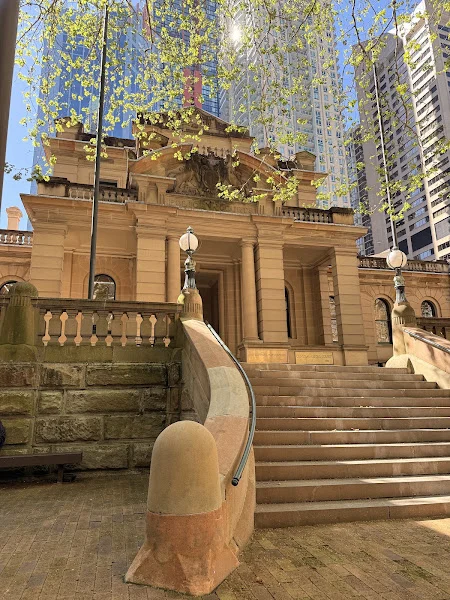
The Central Courthouse is a heritage-listed sandstone building completed in 1892 and designed under the Colonial Architect of New South Wales, with James Barnet as designer and Walter Liberty Vernon supervising construction. Built in the Federation Free Classical style, it has been listed on the New South Wales State Heritage Register since 2 April 1999. For much of its life the building served as the Central Local Court, known historically as the Police Law Courts or Central Police Court.
After the Central Local Court closed, the building underwent an extensive refurbishment and reopened as a District Court venue. The Governor of New South Wales, Her Excellency the Honourable Margaret Beazley AC KC, officially opened the refurbished Central Courthouse in 2025, alongside Chief Judge Justice Sarah Huggett. The upgrade created new District Court courtrooms that appear on the daily law list as Central Court 1 through Central Court 4, adding trial and sentencing capacity to the Sydney CBD.
What the Central District Court hears
As a District Court venue, the Central Courthouse handles the two broad streams of work that define the intermediate court: serious criminal matters and higher-value civil disputes, along with appeals from the Local Court. Understanding which matters belong here helps practitioners, defendants and members of the public work out whether a case will be listed at Central, at the Downing Centre, or elsewhere.
Criminal matters
In its criminal jurisdiction the District Court can deal with all indictable offences except murder, treason and piracy, which are reserved for the Supreme Court. Cases reach the court after being committed from the Local Court or the Children's Court, either for trial or for sentence. Where an accused pleads not guilty, the matter proceeds to a trial before a judge and a jury of 12, unless the accused elects a trial by judge alone. Where a person pleads guilty, a judge conducts a sentence hearing without a jury. The prosecution, usually the Office of the Director of Public Prosecutions, must prove the charge beyond reasonable doubt.
Serious offences commonly listed on the Central District Court law list include:
- Assault and other offences causing injury
- Sexual offences, including historical matters
- Armed robbery and aggravated break and enter
- Drug supply and large commercial drug matters
- Fraud and dishonesty offences
- Manslaughter and other serious offences short of murder
Civil matters
The District Court's civil jurisdiction changed on 16 December 2022, when the general jurisdictional limit rose from $750,000 to $1,250,000. Many older guides still quote the outdated $750,000 figure, so it is worth confirming the current position before filing. In practice, the civil work at a District Court venue covers:
- General claims from $100,001 up to $1,250,000, and above that amount if the parties consent
- Motor accident claims of any value, with no upper limit
- Workplace injury damages claims, also with no upper limit
- Equity proceedings and temporary injunctions up to $100,000
- Common categories such as breach of contract, personal injury and defamation
Appeals from the Local Court
The Central District Court also exercises appellate jurisdiction. It hears appeals from the Local Court against conviction and against sentence in criminal matters, as well as appeals against judgment in civil matters. Decisions made by the District Court in its civil jurisdiction can in turn be appealed to the Supreme Court or the Court of Appeal where there are proper grounds.
Specialist lists and programs at the Central Courthouse
The Central Courthouse is now the home of the Walama List, a specialist sentencing list for Aboriginal and Torres Strait Islander people with matters before the District Court. The list takes a therapeutic and holistic approach to sentencing, with core aims of reducing reoffending, addressing the overrepresentation of First Nations people in custody, and building community participation and confidence in the justice system. It began as a pilot at the Sydney Downing Centre in 2022 and now operates under a District Court practice note from its base at Central. Artwork commissioned during the refurbishment features on the walls of the cells used by Walama participants held in custody.
The venue also supports the Child Sexual Offence Evidence Program, which has been expanded across the state to help child witnesses give evidence in sensitive proceedings. Together, these initiatives reflect a broader focus within the District Court on trauma-informed practice and on improving the experience of vulnerable court users.
Because the Central Courthouse sits within the same precinct as the Downing Centre, people often find their matter listed at one venue when they expected the other. If you are chasing a next day schedule, check the Downing Centre court list today as well, since District Court trials and sentence hearings can be spread across both buildings. When a matter is committed up from a summary hearing, it may first appear on the Downing Centre local court list before reaching a Central courtroom.
District Court of New South Wales by the numbers
The scale of the District Court's workload puts the Central Courthouse in context. Recent figures from the NSW Bureau of Crime Statistics and Research and the court's own reporting include:
- New South Wales criminal courts finalised 156,256 court appearances in 2025, up 8.3 per cent on 2024.
- District Court criminal finalisations were 3,120 in 2025, down 7.5 per cent from 3,374 in 2024.
- Criminal trial finalisations in the District Court rose 4.9 per cent, from 656 to 688 matters.
- The median delay for proceeded District Court trials was about 843 days in 2025, slightly longer than the 834 days recorded in 2024.
- The court recorded roughly 1,488 criminal trial registrations in its 2023 Annual Review, with 1,354 trials finalised.
- More than 80 judges preside across the District Court's statewide criminal and civil work.
These numbers explain why trial delays and listing management remain central concerns for the court, and why additional courtrooms at Central were a welcome addition to Sydney's capacity.
How to read and check the Central District Court list
The Central District Court list is a daily schedule of every matter set down before the District Court at the Central Courthouse. Each entry generally shows the party name, the assigned courtroom (for example Central Court 1 or Central Court 4) and the listed time. Court lists across New South Wales are typically prepared for the next sitting day and published in the afternoon of the preceding business day, so it is normal for the following day's list to appear from around mid to late afternoon.
The authoritative source is the NSW Online Registry and the official Online Court List, where you can search by party name, case number, listing date, listing type and the presiding judicial officer. Because listings can change at short notice, anyone attending should confirm the courtroom and time on the day, arrive early to allow for security screening, and check with the registry if anything is unclear. Names on public summaries are often partially masked for privacy, and a summary page is never a substitute for the official registry record.
Relationship with the Downing Centre
The Central Courthouse and the Downing Centre operate as closely linked venues within the same precinct. The Downing Centre, at 143 to 147 Liverpool Street, is a former Mark Foy's Piazza Store that has served as a courthouse since 1985 and houses both Local Court and District Court rooms. This connection became especially important in 2025. On 17 June 2025 the Downing Centre was closed after a burst Sydney Water main flooded the building and damaged critical electrical infrastructure. During the closure, matters were redistributed to alternative venues, including the John Maddison Tower and the Central Courthouse.
The Downing Centre reopened on 19 December 2025 following about six months of remediation, with Local Court sittings returning first and the District Court resuming full capacity from early February 2026. The episode highlighted how the Central Courthouse now functions as a key part of the CBD court network rather than a standalone site.
Visiting the Central Courthouse
Address and contact
The Central Courthouse is located at 98 Liverpool Street, Sydney NSW 2000. It sits within the Sydney CBD, close to the Downing Centre and within walking distance of major transport. Always confirm registry contact details and hearing information through the official NSW courts channels before attending.
Getting there
- By train: the courthouse is a short walk from Museum Station, with Town Hall and Central stations also nearby.
- By bus: multiple routes serve Liverpool Street and the surrounding CBD streets.
- By car: paid parking is available at nearby commercial car parks, as on-street parking in the CBD is limited.
If a District Court decision made at Central is taken further, criminal appeals move to the Court of Criminal Appeal and civil appeals to the Court of Appeal, both of which sit at the Supreme Court of New South Wales in the CBD. Matters that overflowed during the 2025 flooding were also heard at the John Maddison Tower, so it is worth checking the Sydney District Court list if your case was moved during that period.
Practical tips for attending
- Arrive at least 30 minutes early to allow for mandatory security screening.
- Check your courtroom number against the daily list on arrival, as rooms can change.
- Dress neatly, turn off mobile phones, and follow the directions of court staff and sheriff's officers.
- If you do not have a lawyer, ask about Legal Aid NSW or a duty solicitor at the registry.
- Arrange interpreter services in advance through the registry if you need them.
Frequently asked questions
Is the Central District Court the same as the Downing Centre?
They are separate but closely linked venues in the same CBD precinct. The Central Courthouse is at 98 Liverpool Street and the Downing Centre is at 143 to 147 Liverpool Street. District Court sittings at Central are listed online as Downing Centre Central Court, and matters can move between the two locations depending on capacity.
What is the difference between the District Court and the Local Court at this venue?
The Local Court deals with summary offences, committals and smaller civil claims up to $100,000. The District Court hears serious indictable offences, higher-value civil claims and appeals from the Local Court. The Central Courthouse operates as a District Court venue.
What types of cases cannot be heard here?
The District Court can hear all indictable offences except murder, treason and piracy, which must be dealt with by the Supreme Court of New South Wales.
When is the daily court list published?
Court lists are generally prepared for the next sitting day and published in the afternoon of the preceding business day. Always verify the final details through the NSW Online Registry, as listings can change without notice.