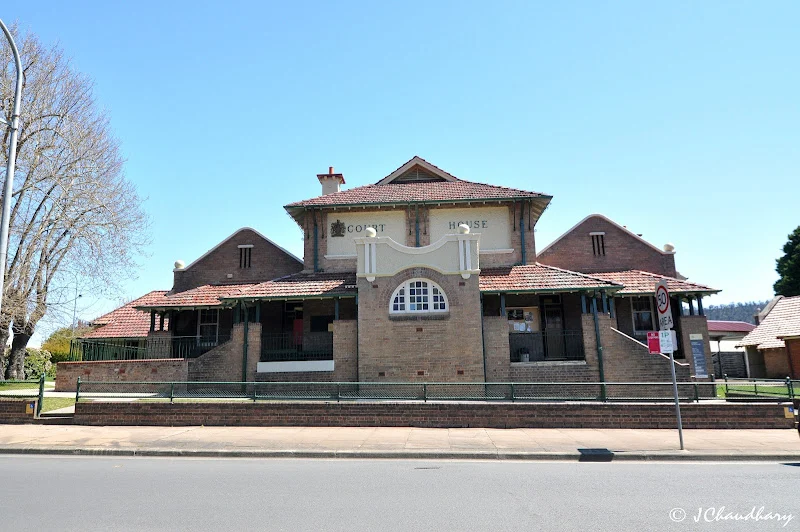
NSW Lithgow District Court List Today

Court: NSW Lithgow District CourtDate: 1 September 2026Total Cases: 2
Name Court Room Time
T** I** Mattick v A** C** IN T** C** AS A B** M** OF C** OF C** C** C** A** 4** 0** 8** 866 Unassigned 10:00 am
R** Hezlett v K** A** LIMITED Unassigned 10:00 am

Last updated: 02 Sep 2026, 2:21 am. Names are partially masked for privacy. Details may change — always check with the Registry.

The Lithgow District Court is the intermediate criminal and civil court that serves the City of Lithgow and the surrounding Central Tablelands of New South Wales. It sits in the heritage Lithgow Courthouse on the corner of Bridge and Mort Streets, the same building used by the Local Court, and hears the more serious matters that are committed up from the local jurisdiction. If you are trying to confirm a listing, work out when the court next sits, or understand what happens on the day, this page brings together the practical detail and the verified statistics that describe how the court actually operates.

Because Lithgow is a regional venue, the District Court does not sit here every week. It runs on a circuit, sharing judicial resources with nearby centres and travelling to hear trials, sentences and appeals in blocks across the year. That circuit model shapes almost everything about the local list, from how far in advance a matter is scheduled to how many cases appear on any given day. Understanding it is the key to reading the Lithgow District Court list correctly.

Where the Lithgow District Court sits

Lithgow Courthouse stands at the corner of Bridge and Mort Streets, Lithgow NSW 2790, with registry correspondence directed to PO Box 18, Lithgow NSW 2790. The building is one of the district's original public works, dating to 1879, and forms part of a wider heritage estate. The NSW court system maintains 123 courthouses that carry some form of heritage listing, and roughly 75 per cent of all courthouses across the state are heritage listed. Despite its age, the Lithgow venue is equipped with Audio Visual Link (AVL) facilities, which allow evidence, appearances and call-overs to be conducted remotely when a party, witness or person in custody cannot attend in person.

In regional New South Wales the Local Court and the District Court share the same courthouse and the same registry contact details, so the counter staff, opening hours and address you use for a Local Court matter are the same ones that apply to a District Court listing. General court enquiries across the state are handled on 1300 679 272 between 8:30am and 4:30pm on weekdays, and most forms can be lodged through the NSW Online Registry rather than in person.

Practical information for court users

  • Address: Cnr Bridge and Mort Streets, Lithgow NSW 2790.
  • Registry mail: PO Box 18, Lithgow NSW 2790.
  • Facilities: Audio Visual Link (AVL) is available for remote evidence and appearances.
  • Accessibility: the courthouse provides wheelchair access, and interpreter services can be arranged in advance through the registry.
  • Arriving: allow extra time on sitting days, as circuit lists concentrate several matters into the same morning.

For everyday summary offences, traffic matters, apprehended violence orders and small civil claims, those cases are dealt with in the Lithgow Local Court list rather than the District Court, so it is worth confirming which court your matter is actually listed in before you travel.

What the District Court of New South Wales does

The District Court of New South Wales is established under the District Court Act 1973 and is the busiest trial court in Australia. It is the middle tier of the state's three tier court structure, sitting above the Local Court and below the Supreme Court, and it carries both a trial and an appellate role across criminal, civil and residual jurisdictions.

Criminal jurisdiction

In its criminal jurisdiction the court hears all indictable offences except murder, treason and piracy, which stay with the Supreme Court. Typical Lithgow District Court matters include serious assault, sexual offences, large drug supply, aggravated break and enter, and dangerous driving causing death or grievous bodily harm. Criminal trials are heard before a judge and a jury of 12 citizens, unless the accused elects a judge alone trial. The overwhelming majority of criminal prosecutions, around 95 per cent, begin in the Local Court, and only the more serious charges are committed up to the District Court for trial or sentence.

Civil jurisdiction

On the civil side the District Court deals with claims from $100,001 up to a jurisdictional limit of $1,250,000, a threshold that took effect on 16 December 2022 and replaced the previous $750,000 ceiling. Its jurisdiction is unlimited for damages arising from motor accident claims and workplace injury claims. Common civil matters include breach of contract, personal injury and defamation, and parties can consent to the court hearing a dispute above the general limit.

Appeals

The District Court also hears appeals from the Local Court and the Children's Court. A person who receives an unfavourable result in a Local Court criminal or traffic matter can, in many cases, appeal that decision to the District Court, which is one reason regional District Court lists carry a steady flow of severity and conviction appeals alongside trials and sentences.

How the Lithgow District Court list works

Lithgow is grouped with Bathurst on the western circuit, and the District Court manages country lists through dedicated circuit practice notes, call-overs and AVL readiness hearings. In practice this means trials, sentences and appeals for the Lithgow area are scheduled into set sitting periods rather than being available on demand every week. When Lithgow is not sitting, larger trials and related matters are frequently listed at the Bathurst District Court, which acts as the principal regional hub for the circuit.

Before a circuit sitting, the court usually holds a call-over to confirm which matters are ready to proceed, how long each is estimated to run, and whether any can be finalised by plea. This is why the published Lithgow District Court list can change quickly in the days before a sitting, as matters settle, adjourn or move to another venue such as the Orange District Court further west along the circuit. Checking the list close to the hearing date, and again on the morning itself, is the most reliable approach.

Reading the daily list

Each entry on a District Court list usually shows the case title, the case number, the presiding judge, the courtroom, the listing type such as trial, sentence, arraignment or directions, and the scheduled time. Matching your matter to the correct line, and arriving well before the listed time, avoids the risk of a matter being called in your absence.

Lithgow District Court by the numbers

The scale of the District Court's work across the state puts the Lithgow circuit in context. According to the District Court of New South Wales 2024 Annual Review, the court registered 1,273 criminal trials in 2024 and, across the year, heard 1,361 trials, 5,401 sentence hearings and 1,350 conviction appeals. On the civil side, 88 per cent of cases were finalised within 24 months despite an increased caseload.

Data from the NSW Bureau of Crime Statistics and Research (BOCSAR) fills in the trend. NSW criminal courts finalised 156,256 court appearances in 2025, an increase of 8.3 per cent on the previous year. District Court finalisations came in at 3,120 matters in 2025, down 7.5 per cent from 3,374 in 2024, while trial finalisations rose 4.9 per cent, from 656 to 688. Timeframes remain the pressure point. The median District Court trial took 834 days from arrest to finalisation in 2024, which is 109 days longer than in 2020. The proportion of proven defendants receiving a custodial penalty across the NSW criminal courts rose to around 10 per cent, which reflects the seriousness of the matters that reach this level.

Key figures at a glance

  • 1,273 criminal trials registered in the NSW District Court in 2024.
  • 1,361 trials, 5,401 sentence hearings and 1,350 conviction appeals heard in 2024.
  • 3,120 District Court criminal finalisations across NSW in 2025.
  • 834 days median time from arrest to finalisation for a District Court trial in 2024.
  • 88 per cent of civil matters finalised within 24 months.

Lithgow in context

The court serves a defined regional community. The City of Lithgow local government area recorded a population of 20,842 at the 2021 Census, spread across a large 4,551 square kilometre area on the western edge of the Blue Mountains, roughly 140 kilometres west of the Sydney central business district. The median age is 46, and 1,621 residents identified as Aboriginal and Torres Strait Islander. Lithgow falls within the state electorate of Bathurst and the federal division of Calare, and it functions as the administrative and service centre for the surrounding Central Tablelands. That regional role is why its courthouse continues to carry both a Local and District Court workload.

How to find today's Lithgow District Court list

The fastest way to confirm a listing is to check the current court list rather than rely on a past sitting pattern. You can:

  • Search the interactive court list on the NSW Online Registry by case name, case number, location, date and jurisdiction, with listings available up to two weeks ahead and for the previous seven days.
  • Browse the consolidated NSW District Court and Local Court lists to see how many matters are set down at Lithgow and neighbouring venues on a given day.
  • Contact the registry on 1300 679 272 if you cannot locate your matter or need to confirm a courtroom.

Because circuit listings shift as matters resolve, treat any daily list as a snapshot and re-check it the afternoon before and the morning of your hearing.

Frequently asked questions

Does the District Court sit in Lithgow every week?

No. Lithgow is a circuit venue, so the District Court sits in scheduled blocks rather than continuously. Between sittings, many matters for the area are listed at Bathurst, the principal District Court centre on the same western circuit.

What is the difference between the Lithgow Local Court and District Court?

The Local Court handles summary offences, traffic matters, apprehended violence orders and civil claims up to $100,000. The District Court hears serious indictable offences, larger civil claims up to $1,250,000, unlimited motor accident and workplace injury damages, and appeals from the Local Court. Both sit in the same Lithgow courthouse.

Can I appear by Audio Visual Link at Lithgow?

The Lithgow courthouse has AVL facilities, and the District Court routinely uses them for circuit call-overs, readiness hearings and appearances by people in custody or witnesses who cannot attend in person. Whether AVL is available for your specific appearance is a matter for the court and should be confirmed in advance through the registry.

Where do I look if my matter is not showing at Lithgow?

Check the NSW Online Registry interactive list first, then the nearby District Court venues on the western circuit such as Bathurst and Orange, because circuit matters are sometimes moved between venues before a sitting.

How serious are the cases heard at the District Court?

They are serious. The District Court hears indictable offences such as serious assault, sexual offences and large-scale drug supply, and around one in ten proven defendants across the NSW criminal courts now receives a custodial penalty. For that reason, most people appearing in this jurisdiction will benefit from legal representation.