| Name | Court Room | Time |
|---|---|---|
| C** L** BURNES for M** MAHER v B** MAHER | Crt 5 Coffs Harbour | 9:30 am |
| M** J** SIPPEL | Crt 3 Coffs Harbour | 9:30 am |
| P** L** KERFOOT for A** MERCY v C** MERCY | Crt 5 Coffs Harbour | 9:30 am |
| S** L** RAMPLING for C** ORMOND v N** D** ORMOND | Crt 5 Coffs Harbour | 9:30 am |
| D** C** G** ROHWER | Crt 5 Coffs Harbour | 9:30 am |
| C** N** DORN for J** L** KRUSHKA v D** ROHWER | Crt 5 Coffs Harbour | 9:30 am |
| B** FLINT | Crt 3 Coffs Harbour | 9:30 am |
| R** F** CRANE | Crt 3 Coffs Harbour | 9:30 am |
| A** K** R** BAILEY | Crt 3 Coffs Harbour | 9:30 am |
| S** B** SOWTER for R** ORMOND v N** D** ORMOND | Crt 5 Coffs Harbour | 9:30 am |
| D** J** ANDERSON | Crt 3 Coffs Harbour | 9:30 am |
| N** D** ORMOND | Crt 5 Coffs Harbour | 9:30 am |
| C** MERCY | Crt 5 Coffs Harbour | 9:30 am |
| P** BENFIELD | Crt 3 Coffs Harbour | 9:30 am |
| K** GLENNON | Crt 3 Coffs Harbour | 9:30 am |
| B** W** KING | Crt 5 Coffs Harbour | 9:30 am |
| B** P** MAHER | Crt 5 Coffs Harbour | 9:30 am |
| M** J** THOMPSON | Crt 5 Coffs Harbour | 9:30 am |
| A** K** BAILEY | Crt 3 Coffs Harbour | 9:30 am |
| D** ROHWER | Crt 5 Coffs Harbour | 9:30 am |
| R** D** GEE | Crt 3 Coffs Harbour | 9:30 am |
| C** H** WINNEY for E** SHAW v B** KING | Crt 5 Coffs Harbour | 9:30 am |
Last updated: 12 Sep 2026, 3:35 am. Names are partially masked for privacy. Details may change — always check with the Registry.
The Coffs Harbour Local Court is the primary entry point to the justice system for residents of the Mid North Coast of New South Wales. It sits within a modern five-storey justice precinct on Beryl Street, sharing the building with the Coffs Harbour District Court and hosting circuit sittings of the Federal Circuit and Family Court of Australia. For most people charged with an offence, involved in a civil dispute, or seeking the protection of an Apprehended Violence Order, this is where their matter begins and, in the majority of cases, where it is finalised. The court serves Coffs Harbour itself along with nearby communities including Sawtell, Woolgoolga, Toormina and Boambee, and forms part of a regional network that supports the wider Mid North Coast population of more than 226,000 people.
Understanding how the court works before you arrive can reduce a great deal of stress. This guide explains the location, the types of matters heard, the terminology used on the daily law list, and what recent statewide statistics tell us about how Local Courts operate. All information is general in nature. For advice about your specific situation, speak with a solicitor or Legal Aid NSW.
Where the Coffs Harbour courthouse is located
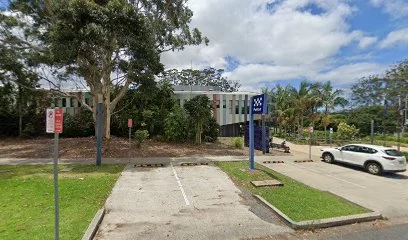
The courthouse address is 2-16 Beryl Street, Coffs Harbour NSW 2450. The postal address is PO Box 18, Coffs Harbour NSW 2450. The building sits close to the Coffs Harbour city centre, a short distance from Coffs Central shopping centre and roughly two kilometres from Coffs Harbour railway station. Coffs Harbour is located approximately 540 kilometres north of Sydney and around 390 kilometres south of Brisbane, making it one of the largest court hubs on the North Coast.
Getting to the courthouse and parking
- By car: The precinct is near the CBD. Street parking and limited off-street parking are available nearby, but spaces fill quickly on busy sitting days, so arrive early.
- By train: Coffs Harbour station is about two kilometres away, with a short taxi or bus connection to the court.
- By bus: Local services stop within walking distance of Beryl Street.
- Accessibility: The building provides wheelchair access and accessible facilities. Contact the registry in advance if you need assistance or an interpreter.
Registry hours and contact details
- Address: 2-16 Beryl Street, Coffs Harbour NSW 2450
- Registry hours: Monday to Friday, 9:00am to 4:30pm
- Telephone hours: Monday to Friday, 8:30am to 4:30pm
- Telephone: 1300 679 272
- Remote appearances: Audio Visual Link (AVL) facilities are available at this location
What matters the Coffs Harbour Local Court hears
The Local Court has a broad workload that touches almost every area of everyday law. It deals with the great majority of criminal prosecutions in the state, the early stages of serious indictable matters, a wide range of traffic offences, protection order applications and civil claims within set financial limits.
Criminal and summary offences
Most criminal matters in New South Wales are summary offences, which are heard and decided by a magistrate without a jury. Examples include offensive behaviour, minor assault, low-level drug possession and property offences. The Local Court also conducts committal proceedings for more serious indictable offences, deciding whether there is enough evidence for a matter to proceed to the District or Supreme Court.
Traffic and drink driving matters
Traffic prosecutions form a significant share of the list at any regional court. Common matters include drink driving and drug driving, driving while suspended or disqualified, negligent driving and speeding offences dealt with by court attendance notice. Traffic and vehicle regulatory offences are consistently the single largest category of proven matters across the NSW Local Court system.
Apprehended Violence Orders (AVOs)
The court hears applications for both Apprehended Domestic Violence Orders and Apprehended Personal Violence Orders. These civil orders are designed to protect a person from violence, threats, intimidation or stalking. Many AVO applications are brought by police on behalf of a person in need of protection, and they often run alongside related criminal charges.
Civil disputes and small claims
On the civil side, the Local Court resolves monetary disputes through two divisions. The General Division hears claims up to $100,000, covering matters such as unpaid debts, contract disputes, property damage and consumer claims. The Small Claims Division deals with claims up to $20,000 through a less formal process designed to be accessible without a lawyer. Larger claims are dealt with in the District or Supreme Court.
How the Local Court fits within the NSW court hierarchy
New South Wales operates a tiered court structure. The Local Court sits at the base, the District Court hears serious criminal trials and larger civil claims, and the Supreme Court deals with the most serious matters. Although it is the lowest tier, the Local Court carries the heaviest volume by a wide margin. In the twelve months to June 2025, the Local Court accounted for around 94 per cent of all finalised criminal court appearances in the state, with the Children's Court making up about 4 per cent and the higher courts around 2 per cent. Matters that exceed the Local Court's power are committed or transferred to the Coffs Harbour District Court, which operates from the same precinct.
Not every matter that starts at Coffs Harbour stays here. Serious indictable charges are committed to the Coffs Harbour District Court in the same Beryl Street building, and appeals from a magistrate's decision are also heard there. Reportable deaths on the Mid North Coast are directed to the Coffs Harbour Coroners Court. Knowing which list holds your matter saves a wasted trip, so confirm the court before you travel.
Coffs Harbour Local Court in context: the numbers
Statewide data published by the NSW Bureau of Crime Statistics and Research (BOCSAR) and the Australian Bureau of Statistics helps put the local workload in perspective. These figures describe the NSW system and the Coffs Harbour community rather than a single courtroom, but they explain why the daily law list can be long and why some matters take time to resolve.
- NSW criminal courts finalised 156,256 court appearances in 2025, an increase of 8.3 per cent on the previous year.
- Local Court finalisations rose 9.1 per cent, from 134,735 in 2024 to 146,977 in 2025.
- 86 per cent of finalised defendants had at least one proven charge, while around 8 per cent of matters were withdrawn by the prosecution.
- Domestic violence related matters grew 13.3 per cent and now represent more than one in four Local Court finalisations across the state.
- The median time from arrest to finalisation for defended hearings fell from 275 days to 247 days, a reduction of 28 days.
- About 9.3 per cent of defendants were bail refused at the time their matter was finalised.
- The Coffs Harbour local government area had a population of 78,759 at the 2021 Census, with a median age of 44, and it continues to grow as a regional centre.
Understanding your Coffs Harbour court list
The daily law list, sometimes called the court list or daily court list, sets out which matters are being heard, in which courtroom, and at what time. Names are commonly listed with a courtroom number and a start time, and prosecutor or applicant details may appear alongside the defendant. Knowing the language of the list makes it far easier to work out what your appearance involves.
Mentions, hearings and sentencing
- Mention: A short, procedural appearance where the magistrate checks the progress of a case, sets timetables or takes a plea. Many first appearances are mentions.
- Hearing: A defended hearing where evidence is presented and the magistrate decides whether a charge is proven. These take longer and are usually listed separately.
- Sentence: The stage where the court imposes a penalty after a guilty plea or a finding of guilt.
- Adjournment: Where a matter is postponed to a later date, often to allow time to obtain legal advice or gather documents.
People often reach this page while looking for a nearby registry rather than Coffs Harbour itself. To the north, the Grafton court list covers the Clarence Valley, while to the south the Port Macquarie court list serves the Hastings. Both sit on the same regional circuit and publish their own daily law list. If your notice names one of those towns, check that court's listing rather than this one.
Preparing for your day at the courthouse
A little preparation goes a long way. The following checklist reflects standard practice at NSW courts and can help your appearance run smoothly.
- Confirm your court date and courtroom number on the daily list before you travel, as allocations can change.
- Arrive early to allow time for security screening at the entrance.
- Bring photo identification, your court attendance notice or summons, and any relevant documents or evidence.
- Dress neatly and behave respectfully. Address the magistrate as "Your Honour".
- Switch off electronic devices before entering the courtroom.
- If you need an interpreter or accessibility support, contact the registry ahead of time.
- Seek legal advice early. Delaying advice can limit your options.
Support services at the Coffs Harbour Justice Precinct
Several services operate in and around the courthouse to assist people appearing before the court. A Court Liaison Service, delivered through Justice Health and Forensic Mental Health, provides free mental health assessments for people who may have a mental illness, mental disorder or cognitive impairment, with reports made available to the magistrate, police prosecutor and defence. Legal Aid NSW and duty solicitors can offer guidance to eligible people, and Aboriginal support services are available reflecting the significant First Nations community in the region. If you are unsure where to turn, the registry can point you toward the right service.
Frequently asked questions
What time does the Coffs Harbour Local Court start?
Most matters are listed from 9:30am, although your individual start time appears on the daily law list. The registry counter is open from 9:00am to 4:30pm, Monday to Friday. Always arrive early to clear security.
How do I find out if my name is on the court list?
You can check the published daily law list for the Coffs Harbour Local Court by name, date or matter type. Because listings can change at short notice, confirm your details with the registry on 1300 679 272 if you are uncertain.
What is the difference between the Coffs Harbour Local Court and District Court?
The Local Court hears summary offences, traffic matters, AVOs and civil claims up to $100,000, while the District Court deals with serious indictable offences, larger civil claims and appeals from the Local Court. Both operate from the same Beryl Street precinct.
Can I appear by Audio Visual Link?
Yes. AVL facilities are available at Coffs Harbour, allowing some appearances to be conducted remotely. Whether AVL is appropriate for your matter is decided by the court, so ask the registry or your solicitor in advance.
Do I need a lawyer for the Local Court?
You are not required to have a lawyer, and the Small Claims Division in particular is designed to be accessible without one. For criminal, traffic and AVO matters, obtaining legal advice is strongly recommended because the outcome can affect your record, your licence and your liberty. Legal Aid NSW may be able to help if you are eligible.