| Name | Court Room | Time |
|---|---|---|
| K** SOLUTIONS AUSTRALIA PTY L** v S** CONCRETE SOLUTIONS PTY L** | Court 6 | TBA |
| B** Madathil J** v C** M** | Court 6 | TBA |
| R**, R** RAHBAR | Court 6 | TBA |
Last updated: 09 Sep 2026, 10:16 am. Names are partially masked for privacy. Details may change — always check with the Registry.
The Adelaide Magistrates Court sits at the base of South Australia's court hierarchy, yet its civil registry processes the largest share of everyday money disputes filed anywhere in the state. If you are searching for the civil cause list, a lodged claim, or a hearing date, this page keeps the daily record in one place so you can confirm where and when your matter is being heard. The court operates under the Magistrates Court Act 1991 (SA), which sets its powers, its monetary ceilings and the two civil divisions that decide how your dispute is managed from filing through to judgment.
In its civil jurisdiction, the Adelaide Magistrates Court hears general claims valued up to $100,000, as set out in section 8 of the Magistrates Court Act 1991 (SA). Anything above that threshold moves up to the District Court, and only the most substantial disputes reach the Supreme Court. This ceiling makes the Magistrates Court the busiest civil forum in South Australia for contract disputes, debt recovery, motor vehicle accident claims, fencing disagreements and building complaints. Understanding which division your claim belongs in is the first step to reading the daily list correctly.
How the Civil Jurisdiction Is Structured
South Australia runs a two-tier civil system inside the one Magistrates Court, and each tier follows a different procedure. The Minor Civil Claims Division deals with disputes up to $12,000, where the process is deliberately simplified so that self-represented parties can lodge and argue a claim without a solicitor. The General Claims Division handles matters between $12,001 and $100,000, where formal pleadings, directions hearings and conciliation conferences apply. Knowing your division tells you which list to check and what fees are likely to apply if your case proceeds to trial.
The minor claims pathway is designed for accessibility. Fencing disputes under the Fences Act 1975, small building disagreements, negligence claims and contract disputes commonly sit here. Legal representation is generally limited in minor claims unless the court grants leave, which keeps costs proportionate to the amount in dispute. If a minor claim later exceeds $5,000 and a party elects to move it up, the action can be transferred to the General Claims Division and ceases to be treated as a minor matter.
General Claims and the Conciliation Model
General claims follow a more structured route. After a claim is filed, the respondent has 28 days to enter a defence. Once a defence is lodged, the registry issues a notice for a directions hearing, and the court also convenes a conciliation conference with the express purpose of resolving the dispute before it reaches trial. This built-in settlement stage explains why many listed matters resolve without a full hearing, and why the daily civil list changes frequently as cases settle, adjourn or are finalised by consent.
Where the Court Sits and When
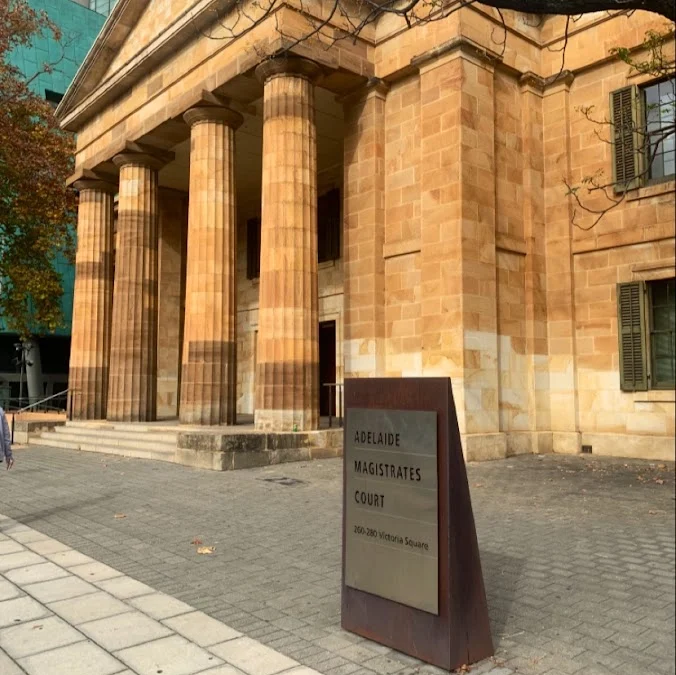
The Adelaide Magistrates Court is located at 260-280 Victoria Square, Adelaide SA 5000, on the south-eastern corner of Victoria Square in the Adelaide legal precinct. The Magistrates Court Civil Registry is the point where documents are lodged in civil cases, including car accident claims and minor claims, and where listing information is made available to the public. Registry hours run from 9:00 am to 4:30 pm, Monday to Friday, and the court can be reached on (08) 8204 2444. Buses and trams stop directly in Victoria Square, and public parking is available on Mill Street off Gouger Street and in the Central Market precinct.
The Adelaide venue anchors a wider network. Including the Chief Magistrate, there are 34 magistrates across South Australia, with metropolitan sittings also held at Christies Beach, Elizabeth, Mount Barker and Port Adelaide, plus nine magistrates based in regional courts. The current Chief Magistrate, Her Honour Judge Mary-Louise Hribal, has led the court since 1 October 2015. This structure means a civil matter listed in Adelaide is administered under the same rules that govern every other magistrates venue in the state, giving the daily list a consistent format wherever you search.
Reading the Daily Civil List
A civil cause list is more than a set of names and times. Each entry usually identifies the parties, the file or action number, the presiding magistrate or registrar, the courtroom, and the type of event, whether that is a directions hearing, a conciliation conference, an assessment of damages or a trial. Because settlement is encouraged at multiple stages, listings can shift at short notice, so it is worth confirming your matter on the morning of the hearing rather than relying on a list published days earlier.
- Directions hearing: an administrative step where the court sets a timetable for the case.
- Conciliation conference: a supervised attempt to settle before trial, often decisive in general claims.
- Trial or hearing: the contested stage where evidence is heard and judgment given.
- Enforcement: steps taken after judgment to recover a monetary order, including through the court's collection and enforcement functions.
How South Australia Compares With Other States
Civil thresholds vary noticeably across Australia, which is why a claim that belongs in the Magistrates Court in Adelaide might sit in a different tier interstate. South Australia's $100,000 general claims ceiling aligns closely with Victoria, where the Melbourne Magistrates' Court also hears money claims and disputes up to $100,000. Queensland sets its magistrates limit higher at $150,000, while Western Australia caps its Magistrates Court civil jurisdiction at $75,000. For anyone comparing the daily lists you can view through our courts SA case list, these differences explain why claim values and court names do not always translate neatly from one state to the next.
The South Australian model is distinctive in one respect. Parties to an action may, by agreement, waive the monetary limit on the civil jurisdiction of the Magistrates Court, which then allows the court to determine the matter without regard to the usual ceiling. This flexibility is uncommon and can keep a larger dispute in the lower court where both sides prefer a faster, less costly process. It is one reason the Adelaide civil list occasionally features claims that appear to exceed the standard threshold.
When a Claim Moves Beyond the Magistrates Court
Claims above $100,000 are commenced in the District Court, which hears non-personal injury civil matters over that figure and personal injury claims up to the same level. You can track those higher-value matters through the district court listings SA, which follow their own listing conventions and directions timetable. The largest and most complex civil disputes, along with appeals from the Magistrates Court, are heard in the Supreme Court, and the supreme court listings SA record those proceedings. Appeals from a magistrate's civil decision ordinarily travel up this same path.
Knowing the appeal route matters for practical planning. A civil decision of the Adelaide Magistrates Court can be appealed to the District Court or, in defined circumstances, the Supreme Court of South Australia. Because appeal timeframes are strict and the correct forum depends on the nature of the order, checking the right daily list from the outset helps you follow a matter as it progresses through the hierarchy rather than losing track of it after judgment.
Costs, Fees and Practical Considerations
Filing and listing fees apply at several stages of a civil action, and the amount depends on the claim value and the division. A listing trial fee applies once a general claim is set down for trial, and the court rules contain important provisions on legal costs tied to settlement offers. If a successful party is awarded no more than a filed offer, they may not recover the full costs they would otherwise have claimed. This rule rewards realistic settlement and is a strong incentive to resolve disputes at the conciliation stage rather than pressing on to a contested hearing.
Support services sit alongside the registry to help self-represented parties. A legal advice clinic operates at the Adelaide Magistrates Court from Monday to Friday, and duty solicitor assistance is available at major venues through the Legal Services Commission of SA. Mediation and pre-lodgement debt collection options can also resolve disputes before a formal claim is issued. For quick access to any of these matters across the state, our court listings adelaide hub links the metropolitan civil venues that share the same procedures.
Frequently Asked Questions
What is the maximum claim the Adelaide Magistrates Court civil division can hear?
The civil jurisdiction extends to claims up to $100,000 under section 8 of the Magistrates Court Act 1991 (SA). Minor civil claims are capped at $12,000 and follow a simplified procedure, while general claims cover the range up to $100,000.
Where is the Adelaide Magistrates Court civil registry located?
The court is at 260-280 Victoria Square, Adelaide SA 5000, with the civil registry open from 9:00 am to 4:30 pm, Monday to Friday. The general enquiry line is (08) 8204 2444.
What types of civil matters are heard here?
The civil list commonly features debt recovery, contract disputes, motor vehicle accident claims, fencing disputes under the Fences Act 1975, negligence claims and building disagreements. Many resolve at a conciliation conference before trial.
What happens if my claim is worth more than $100,000?
Claims above $100,000 are commenced in the District Court, and the most substantial disputes are heard in the Supreme Court. Appeals from a magistrate's civil decision also travel up this hierarchy.
Can the monetary limit ever be exceeded?
Yes. The parties to an action may agree to waive the monetary limit, allowing the Magistrates Court to determine a larger matter without regard to the usual $100,000 ceiling.
Why does the daily civil list change so often?
Because the court actively encourages settlement through directions hearings and conciliation conferences, matters frequently settle, adjourn or finalise by consent. Confirm your listing on the morning of the hearing for the most accurate position.