| Name | Court Room | Time |
|---|---|---|
| C** Mather v S** of N** S** Wales | Unassigned | 9:30 am |
| M** & AJ E** P** L** T** as S** D** & Juices v H** T** P** L** T** as H** Trucks | Unassigned | 9:30 am |
Last updated: 10 Sep 2026, 2:13 am. Names are partially masked for privacy. Details may change — always check with the Registry.
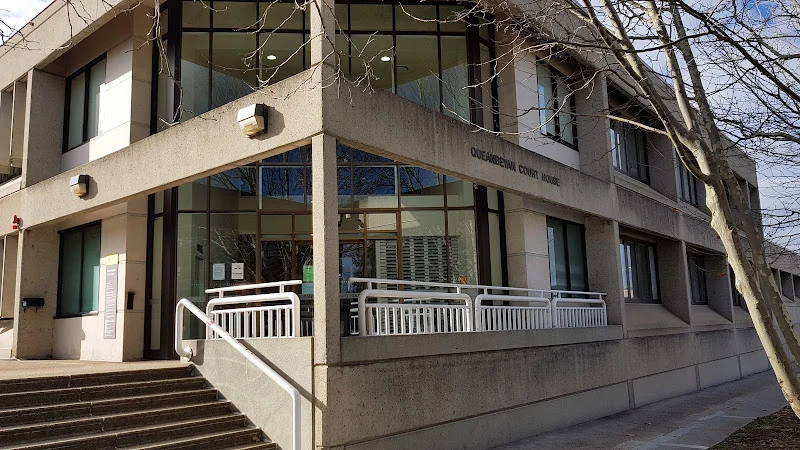
The Queanbeyan District Court sits at 2 Farrer Place, Queanbeyan NSW 2620, and shares its courthouse with the Local Court, which is standard practice for regional New South Wales where the two jurisdictions occupy the same building and use the same registry. This page helps you find the current daily law list, understand what the District Court actually decides, and prepare for a hearing at the Queanbeyan Court House. As the intermediate court in the New South Wales judicial system, it sits above the Local Court and below the Supreme Court, and it hears the more serious matters that begin their life in the lower court before being committed upward.
Because the District Court in Queanbeyan operates on a circuit basis, it does not sit every weekday like the Local Court does. Instead, it runs during scheduled sitting weeks across the year. For the 2024 to 2025 period, civil sittings were listed to commence at 10:00 am on Monday 2 September 2024 and Monday 31 March 2025, with each sitting generally running for one week unless otherwise specified. Sitting dates change annually, so the daily list published for the current week is always the most reliable guide to which matters are before the judge on any given day.
What the Queanbeyan District Court Deals With
The District Court of New South Wales is the busiest trial court of its kind in Australia, and it carries both a criminal and a civil workload. In its criminal jurisdiction, it can hear all indictable offences except murder, treason and piracy, which remain with the Supreme Court. That covers serious matters such as armed robbery, sexual assault, large commercial drug supply, dangerous driving causing death, and serious assault causing grievous bodily harm. Trials in this court are frequently heard before a judge and a jury of twelve, which is one of the clearest practical differences between the District Court and the Local Court downstairs.
In its civil jurisdiction, the court hears claims from $100,001 up to a maximum of $1,250,000, and it can go beyond that ceiling where the parties consent. It also has unlimited jurisdiction over motor accident personal injury claims regardless of the amount in dispute. Common civil matters at this level include breach of contract, defamation, and personal injury and negligence claims. This is a meaningful step up from the Local Court, whose civil ceiling sits at $100,000, so the value and complexity of a dispute often determines which court will ultimately hear it.
Criminal Appeals From the Local Court
A large share of District Court work involves appeals. If a defendant is convicted or sentenced in the Local Court and believes the outcome was wrong or too harsh, they can appeal to the District Court. The standard time limit is 28 days from the date of conviction or sentence, and an application for leave to appeal can be made up to three months after that date. Appeal papers are lodged at the Local Court registry, and a filing fee applies. For anyone weighing up an appeal, this is one of the most important deadlines to note, because missing the 28 day window narrows your options considerably.
How a Serious Matter Reaches This Court
Almost every serious criminal case in the Queanbeyan region starts in the Local Court, not the District Court. Strictly indictable offences and elected Table offences begin with a first appearance and, where a not guilty plea is entered, a committal process before being sent up to the District Court for trial or sentence. If you want to understand that earlier stage of the process, the Queanbeyan Local Court list covers the summary criminal, traffic, and civil matters that are finalised before a Magistrate. Understanding the relationship between the two courts makes it much easier to follow where a matter sits in the system on any given day.
Finding the Queanbeyan Court List Today
The daily law list tells you which cases are scheduled, the courtroom, and the listing type for the day. Listing types you may see include arraignments, callovers, sentence matters, trials, and mentions. Because listings can move at short notice due to adjournments, guilty pleas, or judicial availability, it is wise to check the current list on the morning of your matter rather than relying on a notice printed weeks earlier. Names on published lists are commonly shown in a partially masked form to protect the privacy of the people involved, which is normal practice for online court list services.
If your matter is being heard elsewhere in the region on the same day, it can help to cross reference nearby registries. The Wagga Wagga District Court list and other regional New South Wales listings follow the same circuit sitting pattern, so the structure of the daily list will look familiar wherever you are appearing. Checking the relevant registry directly is always the safest way to confirm a date, time, and courtroom before you travel.
Attending Court at 2 Farrer Place
The Queanbeyan Court House is a full weekday registry for combined Local and District Court business. Registry counter hours are 9:00 am to 1:00 pm and 2:00 pm to 4:00 pm, Monday to Friday, while the telephone service runs from 8:30 am to 4:30 pm on the general line 1300 679 272. Audio Visual Link, or AVL, facilities are available at this location, which allows some appearances, including certain custody matters and witness evidence, to proceed remotely rather than in person. This is particularly useful for parties or witnesses who cannot easily travel to Queanbeyan.
- Address: 2 Farrer Place, Queanbeyan NSW 2620
- Postal: PO Box 13, Queanbeyan NSW 2620
- General phone: 1300 679 272
- Registry hours: 9:00 am to 1:00 pm and 2:00 pm to 4:00 pm, Monday to Friday
- Access: Wheelchair access, lifts and accessible facilities; interpreter services by prior arrangement
- Remote appearances: AVL facilities available on site
Give yourself time when you arrive. Court staff generally recommend getting to the building around 30 minutes before your listed time so you can clear security screening, find your courtroom, and speak to your legal representative if you have one. Food, drink, and recording devices are not permitted inside the courtroom, and phones should be switched to silent. If you are unsure which courtroom your matter is in, registry and court staff can point you to the right list.
Who the Court Serves
Queanbeyan sits directly on the New South Wales border with the Australian Capital Territory, so this courthouse serves a catchment that includes Queanbeyan itself along with growing communities such as Jerrabomberra, Googong, Bungendore, and the wider Monaro and Southern Tablelands. That border location gives the court a distinctive role, because many people who live in the region cross between New South Wales and the ACT for work and daily life, yet offences committed on the New South Wales side are dealt with under New South Wales law in the New South Wales court system.
For matters that fall outside the District Court's remit, other tribunals and courts sit in the same region. Tenancy, consumer, and certain administrative disputes are handled by the tribunal system rather than the District Court, and you can see how those listings are presented on the Queanbeyan NCAT list. Matching your matter to the correct forum early saves time and avoids appearing at the wrong registry on the wrong day.
Representing Yourself Versus Getting a Lawyer
You are entitled to represent yourself in the District Court, but the stakes at this level are considerably higher than in the Local Court. District Court trials involve formal rules of evidence, jury directions, and sentencing principles that are difficult to navigate without training. For serious indictable charges, and for appeals where the outcome could change a conviction or a custodial sentence, legal representation is strongly recommended. Legal Aid NSW and the Aboriginal Legal Service may be able to assist eligible people, and the registry can point self represented parties toward available support.
Frequently Asked Questions
Does the Queanbeyan District Court sit every day?
No. Unlike the Local Court, the District Court sits on a circuit basis during scheduled sitting weeks rather than every weekday. Civil sittings in recent years have commenced on set Mondays at 10:00 am, and dates are set annually, so you should always check the current sitting calendar and the daily list for your specific matter.
What is the difference between the Local Court and District Court in Queanbeyan?
Both sit in the same building at 2 Farrer Place. The Local Court hears summary offences, traffic matters, and civil claims up to $100,000 before a Magistrate. The District Court hears serious indictable crime, civil claims from $100,001 up to $1,250,000, and appeals from the Local Court, often with a judge and jury.
How do I appeal a Local Court decision to the District Court?
You generally have 28 days from your conviction or sentence to lodge an appeal, with leave available up to three months. Appeal forms are filed at the Local Court registry and a fee applies. Legal advice before lodging is highly recommended, because the grounds and time limits are strict.
Can I appear by video link?
Yes, in appropriate cases. The Queanbeyan Court House has Audio Visual Link facilities, which allow some appearances and evidence to be given remotely. Whether AVL is suitable for your matter is decided by the court, so arrange it in advance through the registry.
Are the names on the court list real?
Published daily lists usually show partially masked names to protect privacy. Listings can also change without notice, so always confirm details with the registry before relying on them. For serious criminal charges heard here, comparing how matters are listed across regional registries such as the Goulburn District Court list can help you understand the standard format used across New South Wales.
Court lists on this page are provided as a public convenience and are drawn from official sources, but they are not a substitute for advice from the court or a qualified lawyer. Details such as courtroom allocation, sitting times, and listing status can change during the day, so the registry at 2 Farrer Place remains the authoritative point of contact for any matter before the Queanbeyan District Court.