| Name | Court Room | Time |
|---|---|---|
| K** Thompson v P** Huynh | Court 1 Dubbo | 9:15 am |
| N** S** W** L** and H** Corporation v S** Williams | Court 1 Dubbo | 11:15 am |
| S** Wijeyesinghe v K** King | Court 1 Dubbo | 11:15 am |
| B** Ashford v N** C** P** L** T** as H** H** Dubbo | Court 1 Dubbo | 12:15 pm |
| C** F** and C** P** L** T** as C** fencing v E** power | Court 1 Dubbo | 12:15 pm |
| F** A** Wani v S** Wilkinson | Court 1 Dubbo | 2:00 pm |
| H** P** T** as H** Plus v A** Gilmore | Court 1 Dubbo | 2:00 pm |
| N** S** W** L** and H** Corporation v S** Thurston | Court 1 Dubbo | 2:45 pm |
| H** P** T** as H** Plus v J** Thornbury | Court 1 Dubbo | 2:45 pm |
| N** S** W** L** and H** Corporation v S** Nean | Court 1 Dubbo | 2:45 pm |
Last updated: 12 Sep 2026, 3:35 am. Names are partially masked for privacy. Details may change — always check with the Registry.
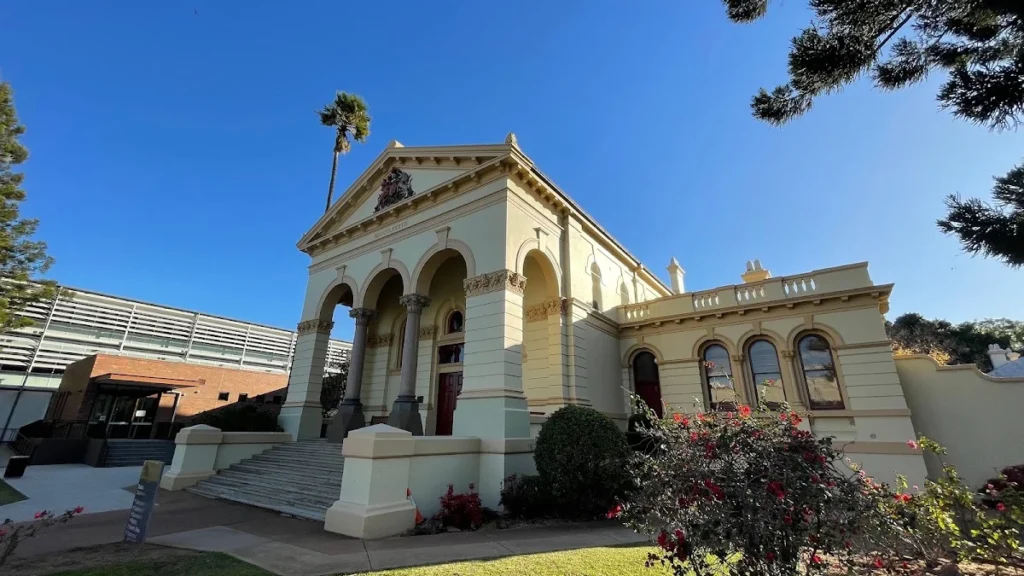
The Dubbo registry of the NSW Civil and Administrative Tribunal (NCAT) hears Consumer and Commercial Division (CCD) matters for residents and businesses across the Orana and Central West regions of New South Wales. The Consumer and Commercial Division is the busiest part of NCAT and resolves everyday civil disputes, including residential tenancy, social housing, consumer claims, home building, strata and community schemes, motor vehicle disputes and retail leases. Matters connected with the Dubbo area are generally listed at Court 1, 137 Brisbane Street, Dubbo NSW 2830, with some listings conducted by telephone or video where the Tribunal directs.
NCAT began operating in 2014, consolidating more than 20 former tribunals and boards into a single state tribunal for civil and administrative matters. It sits separately from the Local Court and District Court and uses a less formal, lower-cost process so that most people can represent themselves. The sections below explain what the Dubbo CCD list covers, how hearings run, the current application fees, the jurisdictional limits, and the statistics that show how the division performs across the state.
What the Dubbo NCAT CCD List Covers
Consumer and Commercial Division work is grouped by case type, each governed by its own enabling legislation. A Dubbo CCD list can include any of the following categories:
- Tenancy and social housing: rental bond disputes, rent arrears, repairs, and termination and possession applications under the Residential Tenancies Act 2010.
- Consumer claims: faulty goods, substandard workmanship or unpaid work under the Australian Consumer Law and the Fair Trading Act 1987.
- Home building: defective or incomplete residential building work and breaches of statutory warranty under the Home Building Act 1989.
- Strata and community schemes: by-law breaches, levies, repairs and management disputes under the Strata Schemes Management Act 2015.
- Motor vehicles: disputes about the purchase or repair of a vehicle.
- Retail leases: disagreements between landlords and tenants of retail shops under the Retail Leases Act 1994.
- Agricultural tenancy and dividing fences: matters that are common across rural properties in the Orana region.
- Residential communities, retirement villages and boarding houses.
Because Dubbo services a large rural catchment, agricultural tenancy and dividing fence matters appear more often here than in metropolitan registries. Tenancy remains the single largest category of work in the division across New South Wales.
NCAT and the Consumer and Commercial Division by the Numbers
The statistics below are drawn from NCAT annual reports tabled in the NSW Parliament and show the scale of the tribunal's workload.
- In 2023 to 2024, NCAT received 71,223 applications across all divisions, finalised 70,666 matters, and achieved an overall clearance ratio of 99.2%.
- The Consumer and Commercial Division is consistently the busiest division within NCAT.
- 82.5% of Consumer and Commercial Division applications were lodged online in 2023 to 2024, rising to 83.3% in 2024 to 2025.
- Hearings and other listing events, including conciliation, directions, mediation and interim orders, numbered 104,837 in 2023 to 2024, held across 48 locations in NSW, including regional venues such as Dubbo.
- Applications lodged increased by 3.5% in 2024 to 2025 compared with the previous year, with a clearance ratio of 95.9%.
- In 2022 to 2023, the tribunal recorded 76,437 applications lodged and a 100% clearance ratio.
- 655 internal appeals were lodged with the NCAT Appeal Panel in 2024 to 2025.
These figures describe a tribunal that finalises almost as many matters as it receives each year. That balance helps keep waiting times shorter than mainstream courts for straightforward disputes.
How a Dubbo NCAT CCD Hearing Works
Where your matter is heard
Consumer and Commercial Division matters are usually listed at the venue closest to the property, or to the place where the contract or dispute arose. Tenancy matters are heard nearest the rental premises, and home building matters nearest the building in question. For renters, landlords and traders in Dubbo, Wellington, Narromine, Gilgandra and surrounding towns, this generally means a listing on the Dubbo CCD list. NCAT may also direct that a matter proceed by telephone or video.
Where a Consumer and Commercial matter overlaps with criminal or apprehended violence proceedings involving the same parties, those are heard separately at the Dubbo Local Court, not by the tribunal. Enforcement of an unpaid NCAT money order also runs through the Local Court registry. If you are checking the Dubbo District Court list by mistake, that court handles serious criminal trials and larger civil appeals rather than tenancy or consumer disputes.
Conciliation and the first listing
Most Consumer and Commercial Division cases begin with a combined conciliation and hearing. At conciliation, a Tribunal officer helps both sides try to reach agreement. Many disputes settle at this stage, and any agreement can be recorded as a consent order that binds the parties in the same way as a decision. If the matter does not resolve, it is either decided on the day or listed for a later contested hearing. Tenancy matters are commonly listed within a few weeks of lodgement, while complex consumer or building claims can take longer.
Representing yourself
Most people appear at NCAT without a lawyer. The tribunal is designed to be accessible, and parties are generally expected to present their own case. Legal representation is automatic in some matters, such as retail lease disputes, and permitted in others only with the tribunal's leave. Bringing a clearly organised bundle of documents, with identical copies for the tribunal and the other party, helps a hearing run smoothly.
Consumer and Commercial Division Application Fees (as at 1 July 2025)
NCAT fees are set under the Civil and Administrative Tribunal Regulation and increase each year in line with the Consumer Price Index. The figures below apply from 1 July 2025. A concession rate, set at 25% of the full fee, is available to eligible pensioners and people receiving legal aid, and a fee waiver may be granted in cases of serious financial hardship.
- Residential proceedings (tenancy, social housing, residential communities, retirement villages): $62 standard, $124 for corporations, $16 concession.
- General consumer or commercial claims up to $10,000 or with no stated amount: $62 standard, $124 corporation, $16 concession.
- Claims over $10,000 up to $30,000: $128 standard, $256 corporation, $32 concession.
- Claims over $30,000: $330 standard, $660 corporation, $83 concession.
- Strata and community scheme general application: $128 standard, $256 corporation, $32 concession.
- Retail leases: $127 standard, $254 corporation, $32 concession.
These fees are generally lower than equivalent court filing fees, which is one reason the division handles such a high volume of everyday disputes.
Monetary Limits and Time Limits
Each case type carries a monetary ceiling and its own time limit. Checking these before lodging helps you file in the correct forum.
- Consumer claims are generally limited to $40,000.
- Home building claims can be heard up to $500,000. Larger claims must proceed in the District Court or Supreme Court of NSW.
- Retail lease disputes are generally heard up to $750,000 for leases signed on or after 1 July 2017.
- Applications for breach of a residential tenancy agreement must usually be made within 3 months of becoming aware of the breach.
- An appeal to the NCAT Appeal Panel must generally be lodged within 28 days of receiving the written reasons for the decision.
NCAT orders for the payment of money are enforced through the Local Court if they are not complied with, which is a separate step from the tribunal hearing itself.
Checking the Dubbo NCAT CCD List Today
The Dubbo Consumer and Commercial Division list on this page shows the parties, court room and listing time for matters scheduled at the Dubbo venue. Names are partially masked to protect privacy. Because hearing details can change at short notice, always confirm your date, time and venue directly with the registry before attending. The NCAT registry can be reached on 1300 006 228 during business hours, and official hearing lists are published on the NSW Online Registry and updated regularly throughout the day.
Frequently Asked Questions
Is NCAT the same as the Dubbo Local Court?
No. NCAT is a tribunal, not a court. The Consumer and Commercial Division handles civil disputes such as tenancy, consumer and building matters, while the Dubbo Local Court deals with criminal, traffic and other court proceedings. The two operate under separate systems.
Do I need a lawyer for a Dubbo CCD hearing?
In most cases, no. The tribunal is built around self-representation, and many people present their own case. Legal representation is automatic for some matters and available for others with the tribunal's permission.
How long does a Consumer and Commercial matter take?
Simple tenancy and consumer matters are often listed within a few weeks and can be decided on the day of the first hearing. Complex building or commercial disputes may run across several months and multiple listings.
Renters and traders outside the immediate Dubbo catchment are sometimes listed at the nearest CCD venue instead. Matters closer to the Central West may sit at Orange NCAT, while those in the Riverina fall to the Wagga Wagga CCD list. If your papers name a different town, check that registry's list rather than the Dubbo court list today, as a wrong venue can mean a wasted trip.
Can I attend my Dubbo NCAT hearing by phone or video?
Sometimes. NCAT may direct that a matter proceed by telephone or video, and you can request permission to attend remotely. Approval is not guaranteed, so make in-person arrangements unless the tribunal confirms otherwise.
What happens if I do not attend?
The hearing usually proceeds without you, and the tribunal can make orders in your absence based on the evidence the other party provides. Attending protects your interests and lets you respond to the other side.
How do I lodge a Consumer and Commercial Division application?
Most applications can be lodged online through NCAT Online Services, which the majority of applicants now use. You can also file by post or in person. You will need the correct legal name and address of the other party, along with any supporting documents.